
Foam-Free Upholstery Is a Health Decision, Not a Trend
A specifier who writes a foam-filled sofa into a living room, a hospitality suite or a healthcare lounge is, in effect, specifying a long-term source of volatile organic compounds into that room. The piece passes BS 5852. The invoice is in order. The client signs it off. And the chemistry continues off-gassing into the air […]
A specifier who writes a foam-filled sofa into a living room, a hospitality suite or a healthcare lounge is, in effect, specifying a long-term source of volatile organic compounds into that room. The piece passes BS 5852. The invoice is in order. The client signs it off. And the chemistry continues off-gassing into the air the occupants breathe for the next ten years.
Foam-free upholstery has been treated as a sustainability concern. It is also, more urgently, a health one.
If you specify furniture for people to sit on, lie on, work on or recover on, the material behind the cover fabric is inside their home, their hotel or their clinic for the working life of the piece. Here is what is actually in there, why it matters, and what to specify instead.
What Is Actually Inside a Foam-Filled Sofa
Polyurethane foam is the default cushion material in the upholstered furniture industry. It has been since the 1950s, when its low cost, light weight and easy machining displaced the natural latex, coir, wool and horsehair build-ups that upholsterers had worked with for centuries.
Foam is a petrochemical product. It is made by reacting polyols with isocyanates, with a mix of catalysts, surfactants and blowing agents. That chemistry does not stop on the factory floor. Residual compounds continue to migrate out of the foam for the life of the cushion.
Then there are the additives. For decades, manufacturers treated foam with brominated flame retardants to meet combustion regulations. Pentabromodiphenyl ether (PBDE) was standard until the mid-2000s. When PBDEs were restricted, the industry moved to chlorinated tris (TDCPP) and a proprietary mix known as Firemaster 550. Independent research on all three has linked them to endocrine disruption, developmental effects and carcinogenicity.
Specifiers often see the phrase “CMHR foam” on a spec sheet. Combustion Modified High Resilience foam passes the UK’s BS 5852 ignition test. It does not mean the foam is free of additive chemistry. It means the chemistry is doing its job.
A piece of upholstered furniture labelled compliant is compliant with a fire standard written into the 1988 UK Furniture and Furnishings (Fire) (Safety) Regulations. It is not a statement about indoor air quality. It is not a statement about chemical migration. It is not a statement about occupant health.
The Indoor Air Quality Question
Foam off-gasses. That much is not disputed. The open questions are how much, for how long, and what is coming out.
Independent work from the Stapleton Lab at Duke University and the Green Science Policy Institute has documented that flame-retardant chemistry in upholstery foam migrates out of the cushion and settles into household dust. Children crawling on a carpeted floor in a room furnished with older foam pieces have carried measurable levels of those compounds in their blood, as documented in peer-reviewed biomonitoring research. The furniture itself does not need to be visibly damaged for this to happen. Ordinary use is enough.
The off-gassing is not limited to the first few weeks after a new sofa is delivered. Volatile organic compounds continue to release as the material ages, and the release accelerates as the foam begins to break down. Ten-year-old foam is more friable than new foam. It sheds microplastic particles into the upholstery and the air around it.
The health signals attached to these compounds sit on a spectrum. Formaldehyde, toluene and xylene are recognised respiratory irritants. The flame-retardant class overlaps with endocrine-disrupting chemistry, with reasonable evidence of effects on thyroid function, neurodevelopment and reproductive health. The research is not complete and the dose response is contested. The direction of travel is not.
For a specifier, the relevant point is not whether any single occupant will develop a measurable problem from any single sofa. The point is that upholstered furniture is one of the largest soft-surface, long-contact materials in any interior. It is breathed near, slept on and touched for years. The cumulative exposure matters.
If the objective is an interior that is healthy to inhabit, the cushion cannot be an afterthought.
Why This Now Matters on a Live Project
The shift is no longer theoretical. Three forces are pushing indoor air quality up the specifier’s checklist.
The first is the standards. WELL v2 includes air-quality and materials features that penalise high-VOC finishes and restrict flame retardants of concern. BREEAM’s Hea 02 credit addresses indoor air quality at handover. LEED Materials and Resources credits push in the same direction. None of those schemes explicitly require foam-free upholstery yet. All of them reward it, and several audit it.
The second is the client. Private residential briefs now routinely ask for non-toxic materials, particularly where there are young children, and particularly at the upper end where informed buyers read the chemistry before they read the price. Hospitality operators are beginning to hear the same question from guests. Healthcare and wellbeing clients, whose whole purpose is the occupant’s recovery, ask it first. A Maggie’s centre, to take the clearest example, cannot sensibly furnish its rooms with cushions that off-gas chemistry associated with endocrine disruption.
The third is the defence. A specifier who writes a foam-filled piece into a bedroom, a children’s space or a healthcare lounge in 2026 cannot point to the 1988 fire regulations alone and call it settled. The literature on flame retardants in upholstery foam has been in the public domain for more than fifteen years. Asking the question and documenting the answer is now part of reasonable practice.
None of this requires a wholesale rewrite of the specification process. It requires one additional paragraph in the upholstery schedule. Declare the cushion build-up. Declare the flame-retardancy route. Declare the end-of-life path. A manufacturer who cannot answer those three lines on a letterhead is the answer to the question.
The UK Regulation Is Being Rewritten
The regulatory position on all of this is shifting under specifiers’ feet.
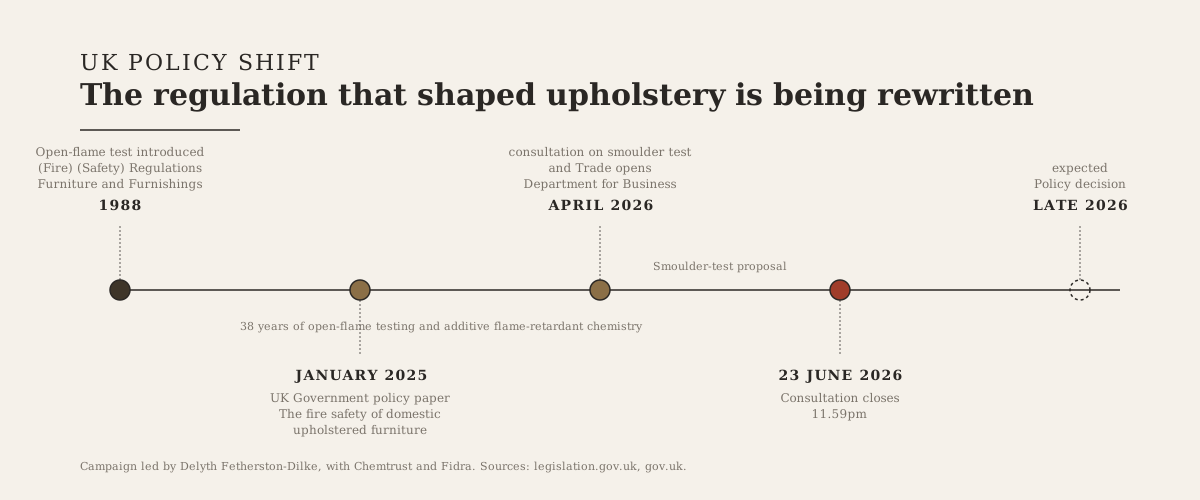
In January 2025 the UK government published a policy paper, The fire safety of domestic upholstered furniture, admitting that the 1988 open-flame ignition test has driven manufacturers to add flame-retardant chemistry to almost all UK upholstery, with health consequences that have moved from contested to documented over the intervening decades. In April 2026 the Department for Business and Trade opened a formal consultation on replacing the open-flame test with a smoulder test, based on a lit-cigarette ignition source, of the kind used in most other jurisdictions. The consultation closed on 23 June 2026. A policy decision is expected before the end of the year.
Much of the credit for the shift belongs to Delyth Fetherston-Dilke, a former lawyer who retrained as an upholsterer, read the research, and campaigned for years alongside independent scientific bodies including Chemtrust and Fidra. It has taken sustained work to move the position of an industry that had shaped its whole build-up around one 1988 test.
The direction is now visible. The UK is moving away from a regulation that effectively mandated chemical flame retardants in foam, toward one that permits and rewards inherently flame-resistant, foam-free build-ups. The pieces you specify today should already be on the right side of the change. Foam-free upholstery, until now a considered choice, will shortly also be the direction the standard itself points.
What Foam-Free Upholstery Actually Means
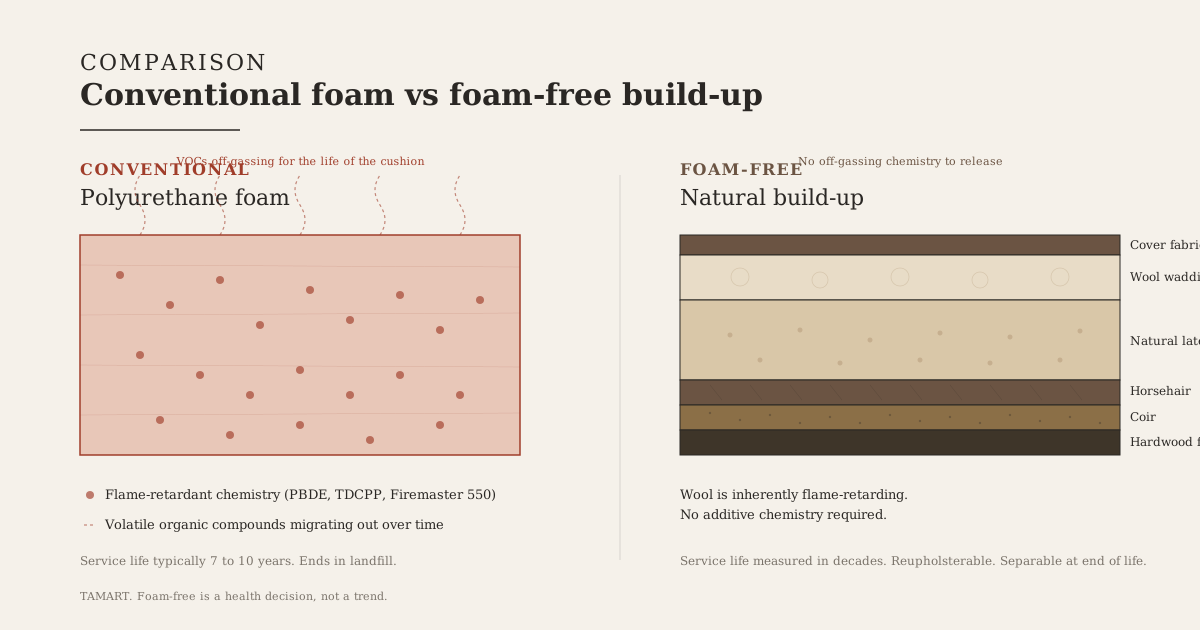
Foam-free upholstery is a starting point, not the whole specification. The more useful question is what replaces the foam, and why each layer is there.
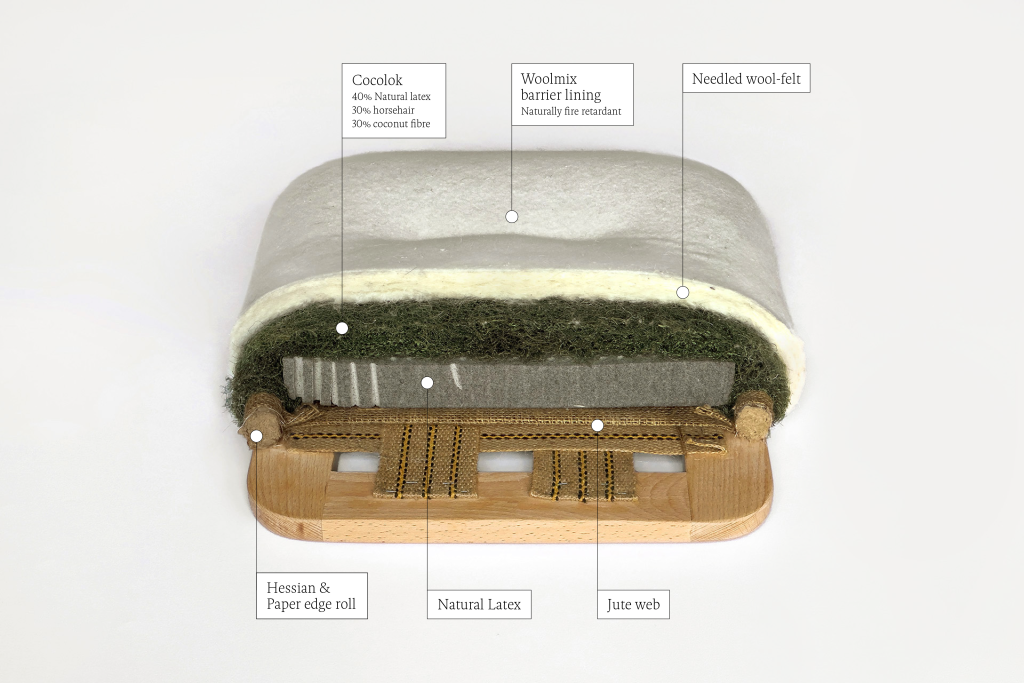
Natural latex from rubber trees provides the resilient core. Wool fibre sits above it as a soft, breathable layer and is inherently flame retarding. In TAMART’s own build-up the wool and cotton felt pass BS 5852 without chemical treatment. The one exception is the rubberised hair filling used in pieces such as the Clore Lounge Chair, which is currently treated to meet the same standard while we work with our upholsterer on an untreated alternative. We would rather state that plainly than let a general claim stand in for the truth about every layer. Coir and horsehair, used in specific places for density and shape retention, need no treatment at all. Recycled fibre wadding adds a final layer of comfort without foam.
Underneath those layers the frame is FSC-certified European hardwood, seasoned and joined by hand. The staples are traditional steel, tied with cotton tapes. Jute webbing, not polypropylene, carries the cushion deck.
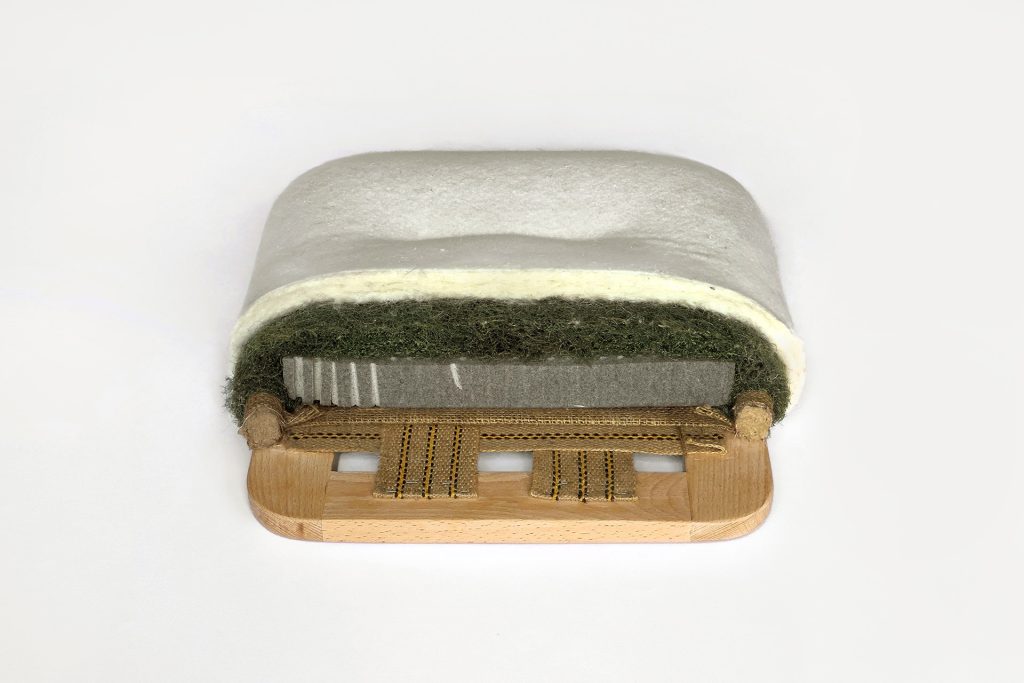
The choice of cover fabric is a separate conversation, and the client’s. Wool, leather, organic cotton and undyed linen all behave differently against the build-up, and the specifier’s priorities on cleanability, colour and tactility will dictate the right answer.
One further point, and it matters. A natural build-up is not a claim to perfection. It is a claim to transparency. Every layer of a foam-free build-up can be named, sourced and accounted for, including the one layer that still needs a chemical treatment we are working to remove. A polyurethane foam cushion cannot make either claim.
For the full material declaration and the chain of custody behind each layer, the TAMART materials and sustainability statement sets out the detail on a product-by-product basis.
Four Questions to Ask a Manufacturer Before You Specify
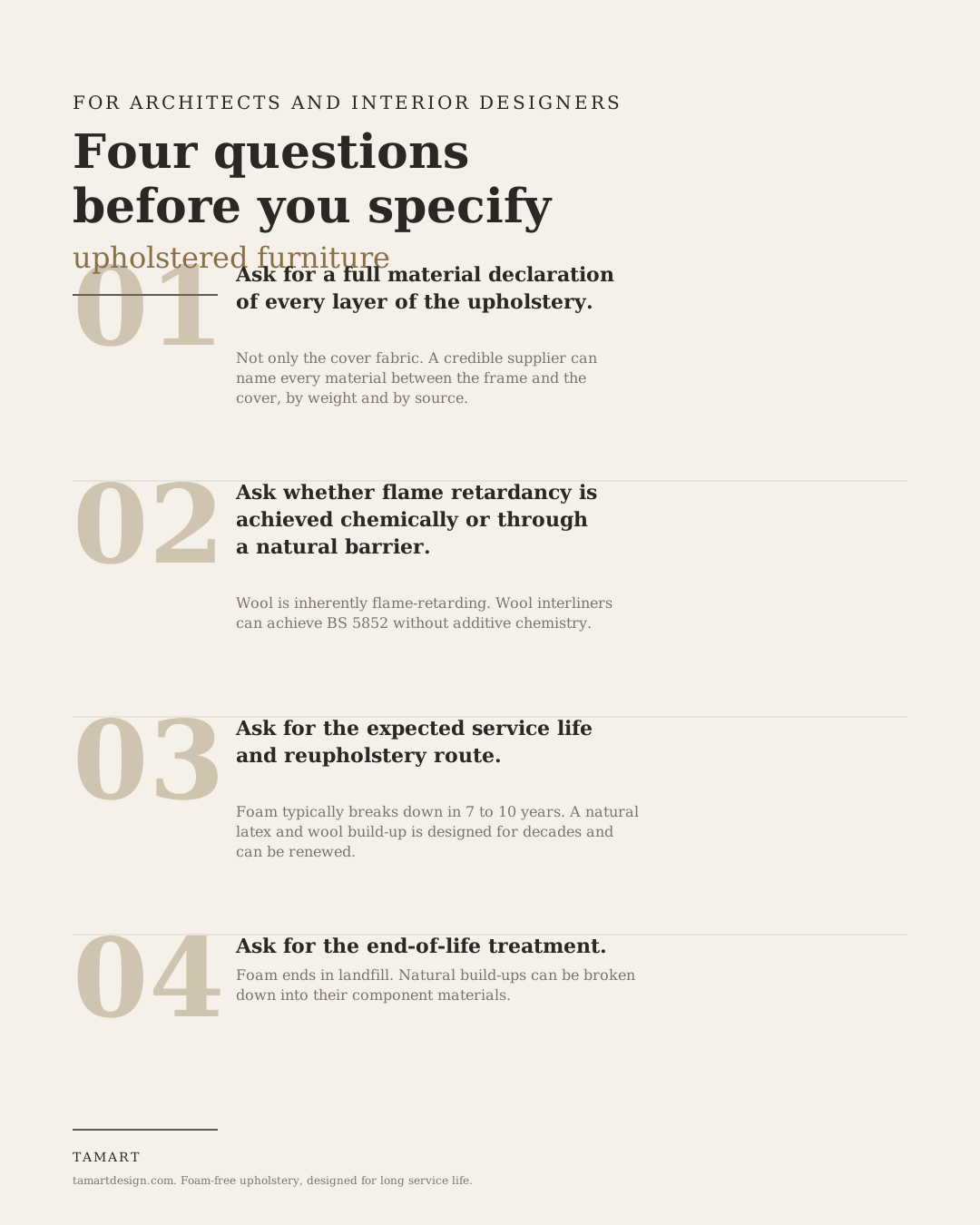
For specifiers working through the upholstered furniture line on a schedule, these four questions separate a credible manufacturer from a compliant one.
- Ask for a full material declaration of every layer of the upholstery, not only the cover fabric. A credible supplier can name every material between the frame and the cover, by weight and by source. If the answer stops at “high-resilience foam”, the declaration is not complete.
- Ask whether flame retardancy is achieved chemically or through a natural barrier. Wool is inherently flame-retarding. Barrier cloths and wool interliners can achieve BS 5852 without additive chemistry. If the answer is “treated foam”, the chemistry is in the piece.
- Ask for the expected service life of the build-up and whether the piece can be reupholstered. Polyurethane foam typically breaks down in seven to ten years. A natural latex and wool build-up is designed for longer service and can be renewed. This matters for lifetime-cost calculations and for healthcare and hospitality programmes where replacement cycles affect budgets.
- Ask for the end-of-life treatment. Foam ends in landfill. Mixed synthetic build-ups are difficult to separate and recycle. Natural build-ups can be broken down into their component materials. A manufacturer who has thought about the end of the piece has usually thought about its beginning.
Four short lines on the upholstery schedule. They change what ends up in the room.
The Quiet Shift Already Underway
Most furniture manufacturers still use polyurethane foam. The honest reason is cost. Foam is cheap, machine-handleable and industrial. Natural latex, wool, coir and horsehair take more time, more labour and more craft.
A small group of makers are working differently. The first generation of British and European upholsterers who never adopted foam in the first place are still around. A second generation has come through over the last ten years, re-examining the build-ups their predecessors used before the petrochemical shortcut arrived.
TAMART belongs to that second group. The build-up is not new. It is the build-up my parents, Tamar de Shalit and Arthur Goldreich, worked with as modernist architects and designers in the 1960s. Natural materials. Long service life. Honest specification. The archive they left behind assumed this was the baseline. For us, it still is.
Specify With Confidence
Foam-free upholstery is a health decision for the people who will sit on the furniture you specify. It is also, over the lifetime of a piece, a quieter and better-built choice.
If you are working on a project where occupant health, material honesty and long service life matter, the TAMART catalogue sets out the full upholstered range, the build-up behind each piece and the specifier’s technical detail.
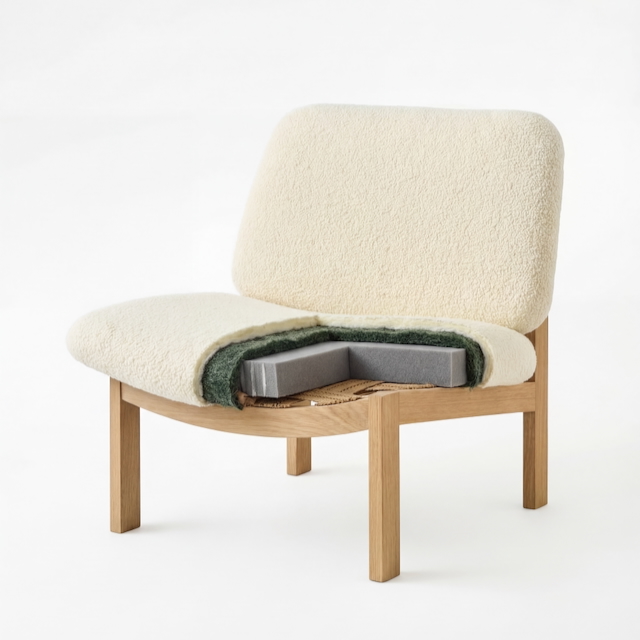
Download the catalogue or, if you would rather see the build-up in section and feel the difference in the cushion, book a visit to our Shoreditch showroom. Every upholstered piece there is opened in one corner so you can see exactly what you are specifying.
Frequently Asked Questions
What is foam-free upholstery?
Foam-free upholstery is furniture that uses natural and recycled cushion materials, such as natural latex, wool, coir, horsehair and recycled fibre wadding, in place of polyurethane foam. It avoids the petrochemical chemistry and the flame-retardant additives associated with conventional foam-filled cushions.
Is polyurethane foam in furniture harmful?
Polyurethane foam off-gasses volatile organic compounds throughout its service life, and has historically been treated with flame-retardant chemistry linked in independent research to endocrine disruption and developmental effects. Ordinary wear is enough for these compounds to migrate into household dust and be measured in the bodies of occupants.
Does foam-free upholstery pass UK fire regulations?
Yes. Wool is inherently flame retarding and barrier cloths and wool interliners achieve BS 5852 compliance without chemical treatment. In our own upholstery, the wool, cotton felt and coir pass this way. The rubberised hair filling is currently the one component still treated to meet the standard, and we are working with our upholsterer to change that. A reputable manufacturer should be able to tell you exactly which layer that is for their own products, not quote the general chemistry.
How long does foam-free upholstery last compared to foam?
A natural latex and wool upholstery build-up is designed to hold its shape for decades and can be reupholstered at the end of its first service life. Polyurethane foam typically breaks down in seven to ten years and ends in landfill.
Is the UK fire regulation for upholstered furniture changing?
Yes. In April 2026 the Department for Business and Trade opened a formal consultation on replacing the 1988 open-flame ignition test with a smoulder test based on a lit-cigarette ignition source. The consultation closed on 23 June 2026 and a policy decision is expected before the end of the year. The reform was led by campaigner Delyth Fetherston-Dilke, alongside Chemtrust and Fidra, and the direction is clear: the UK is moving away from a regulation that effectively mandated chemical flame retardants in foam, toward one that permits and rewards inherently flame-resistant, foam-free build-ups.
What should architects and interior designers ask a furniture manufacturer before specifying?
Ask for a full material declaration of every layer of the upholstery, not only the cover fabric. Ask whether flame retardancy is achieved chemically or through a natural barrier. Ask for the expected service life of the build-up and whether the piece can be reupholstered. Ask for the end-of-life treatment. A manufacturer who cannot answer all four is not a credible specification partner.